Practical Korea travel information, checked against Korean sources.

Category: Arriving & Leaving

Entry paperwork, airport transfers and departure day.

  • Send Your Suitcase to the Airport Instead of Dragging It There

    This guide is written in two parts. English first, Korean below. 이 글은 두 파트로 되어 있습니다. 영문이 먼저, 한국어가 아래에 있습니다.


    PART 1 — ENGLISH

    Departure day usually goes like this. Check out at 11am, flight at 8pm, and nine hours to fill while towing everything you own through a subway system.

    There is a service that removes this, and almost no English guide mentions it: the staffed luggage desks in Seoul subway stations will ship your bag to Incheon Airport instead of holding it for you. You hand it over in the morning and next see it at the airport.

    Here is how it works, what it costs, and where it does not fit.

    1. What the service is

    The subway operator’s luggage desks — T-Luggage — do two separate things. Storage is the one people know: leave a bag, come back for it.

    Delivery is the other. Rather than returning to collect, you nominate a destination and the bag goes there. The two routes that matter to a visitor are:

    • Station → Incheon Airport, for departure day
    • Station → station, for moving between accommodation

    The counters sit at six stations: Hongik Univ., Seoul Station, Myeongdong, Gimpo Airport, Jongno 3-ga and Jamsil, open 09:00–22:00 (T-Luggage).

    2. What it costs

    Station to Incheon Airport, by case size:

    Size Weekday Weekend
    Small (up to 20″) ₩20,000 ₩29,000
    Medium (20–23″) ₩26,000 ₩38,000
    Large (24–27″) ₩31,000 ₩45,000

    Weekends cost 45–50% more. That is a real gap, and departure days often fall on weekends, so check it against your dates rather than assuming the weekday figure.

    Compare it to the alternative honestly. A taxi to Incheon runs around ₩60,000–70,000 and takes your bags with you. The Airport Railroad is far cheaper but you carry everything. Shipping one large case on a weekday, at ₩31,000, sits between them — you still travel cheaply, without the luggage.

    For two people with two cases it stops being obviously worth it. For one person with one big case and a long gap to fill, it usually is.

    3. The timing, which is the part that decides it

    Same-day airport delivery requires dropping the bag off by around 11:30 in the morning [reported]. Miss that and you are storing, not shipping.

    That cut-off lines up almost exactly with hotel checkout, which is either convenient or very inconvenient depending on where you are staying. If your accommodation is not near one of the six counter stations, the morning becomes: check out, travel to a counter with your bags, hand over, then start your day.

    So the honest test is: are you already passing one of those six stations in the morning? If yes, this is close to free convenience. If not, the trip to the counter may cost you the time you were trying to save.

    4. What you need, and what you should check

    To hand a bag over you fill in a short form with basic personal details and receive a handover slip. Keep it — collecting without it means identity verification instead.

    Before you commit, confirm these at the counter, because they change and the published detail is thin:

    • Which terminal the delivery goes to. Incheon has T1 and T2 and they are twenty minutes apart. Check your flight’s terminal against the service’s
    • Where at the airport you collect it, and the collection desk’s hours against your flight time
    • The actual cut-off for your travel date

    That last one matters most. Do not build a departure day around a cut-off you read in a blog post — including this one. Ask when you drop off, or the day before.

    5. When to use storage instead

    Delivery is for the day you leave. Storage is for everything else, and it is much cheaper — subway lockers start around ₩2,200 for four hours, and the staffed desk from ₩3,000.

    Use storage when you have a gap between checkout and a train, or want to shop unencumbered for an afternoon. Use delivery only when the bag’s next stop is genuinely the airport.

    Both, with prices and the locker alternative that avoids the queue, are in our luggage storage guide.

    6. Why this is worth knowing at all

    Because the alternative is worse than people expect. Moving a checked-size case around Seoul means the transfer corridors — up to 414 metres at Hongik Univ. — and it rules out ordinary city buses entirely, since their carry-on limit is 50 × 40 × 20 cm.

    A departure day with luggage is not the same city as a departure day without it. That is what the fee buys.

    Details on both constraints are in taking luggage on Seoul transport.

    7. Before you go

    • Subway luggage desks ship to Incheon Airport, not just store
    • Six counter stations: Hongik Univ., Seoul Station, Myeongdong, Gimpo Airport, Jongno 3-ga, Jamsil
    • Open 09:00–22:00
    • Station → Incheon: ₩20,000–31,000 on weekdays, ₩29,000–45,000 at weekends
    • Same-day delivery needs a drop-off by about 11:30am [reported] — confirm for your date
    • Check which terminal the service delivers to against your flight
    • Keep the handover slip
    • For a gap that ends anywhere but the airport, storage is far cheaper

    PART 2 — 한국어

    출국일은 대개 이렇습니다. 오전 11시 체크아웃, 저녁 8시 비행기, 그리고 가진 짐을 전부 끌고 지하철을 오가며 채워야 할 아홉 시간.

    이걸 없애주는 서비스가 있는데 영문 안내에는 거의 나오지 않습니다. 지하철역 유인 보관 데스크가 짐을 보관해주는 대신 인천공항으로 보내줍니다. 아침에 맡기고 공항에서 다시 만나는 방식입니다.

    어떻게 돌아가는지, 얼마인지, 어떤 경우엔 안 맞는지 정리했습니다.

    1. 무슨 서비스인가

    지하철 운영사의 유인 보관 데스크 또타러기지는 두 가지를 합니다. 사람들이 아는 건 보관입니다. 맡기고 다시 찾으러 가는 것.

    배송은 다른 쪽입니다. 찾으러 돌아가는 대신 목적지를 지정하면 짐이 거기로 갑니다. 방문자에게 의미 있는 경로는 둘입니다.

    • 역 → 인천공항 — 출국일용
    • 역 → 역 — 숙소를 옮길 때

    데스크는 홍대입구·서울역·명동·김포공항·종로3가·잠실 6개 역에 있고 09:00~22:00 운영합니다(또타러기지).

    2. 요금

    역에서 인천공항까지, 캐리어 크기별입니다.

    크기 주중 주말
    소 (20인치 이하) 20,000원 29,000원
    중 (20~23인치) 26,000원 38,000원
    대 (24~27인치) 31,000원 45,000원

    주말이 45~50% 비쌉니다. 적지 않은 차이이고 출국일이 주말인 경우가 많으니, 주중 요금으로 짐작하지 말고 날짜에 맞춰 확인하세요.

    대안과 정직하게 비교해 봅시다. 인천공항까지 택시는 6~7만원선이고 짐을 함께 싣습니다. 공항철도는 훨씬 싸지만 짐을 다 들고 가야 합니다. 주중에 큰 캐리어 하나를 31,000원에 부치는 건 그 사이입니다. 이동은 싸게 하면서 짐만 덜어내는 셈입니다.

    두 사람이 캐리어 두 개라면 값어치가 뚜렷하지 않습니다. 혼자 큰 캐리어 하나에 시간이 길게 남았다면 대개 맞습니다.

    3. 시간이 결국 결정합니다

    당일 공항 배송은 오전 11시 30분쯤까지 맡겨야 합니다 [보고됨]. 놓치면 배송이 아니라 보관이 됩니다.

    이 마감이 호텔 체크아웃 시각과 거의 겹칩니다. 숙소 위치에 따라 편할 수도, 아주 불편할 수도 있습니다. 6개 역 근처가 아니라면 아침이 이렇게 됩니다. 체크아웃하고, 짐 들고 데스크까지 이동하고, 맡기고, 그제야 하루를 시작.

    그래서 판단 기준은 하나입니다. 아침에 그 여섯 역 중 하나를 어차피 지나가나요? 그렇다면 거의 공짜에 가까운 편의입니다. 아니라면 데스크까지 가는 시간이 아끼려던 시간을 먹을 수 있습니다.

    4. 필요한 것과 확인할 것

    맡길 때는 간단한 인적 사항을 적고 인계증을 받습니다. 잘 챙기세요. 없이 찾으려면 신분 확인 절차를 거칩니다.

    결정 전에 카운터에서 이것들을 확인하세요. 바뀌기도 하고 공개된 정보가 얕습니다.

    • 어느 터미널로 가는지. 인천공항은 T1과 T2가 있고 둘은 20분 거리입니다. 내 항공편 터미널과 맞는지
    • 공항 어디서 찾는지, 그 수령처 운영시간이 내 비행기 시각과 맞는지
    • 내 날짜 기준의 실제 마감 시각

    마지막이 가장 중요합니다. 블로그에서 읽은 마감 시각을 전제로 출국일을 짜지 마세요. 이 글도 포함입니다. 맡길 때나 전날에 직접 물어보세요.

    5. 보관이 나은 경우

    배송은 떠나는 날을 위한 것입니다. 그 외에는 보관이고, 훨씬 쌉니다. 지하철 물품보관함이 4시간 2,200원부터, 유인 데스크가 3,000원부터입니다.

    체크아웃과 기차 사이가 비었거나, 오후 동안 짐 없이 쇼핑하고 싶다면 보관입니다. 짐의 다음 목적지가 정말 공항일 때만 배송을 쓰세요.

    둘 다, 그리고 줄을 피하는 보관함 대안까지 짐 보관 안내에 정리했습니다.

    6. 이걸 알아둘 값어치가 있는 이유

    대안이 생각보다 나쁘기 때문입니다. 위탁수하물 크기 캐리어를 들고 서울을 다니면 환승 통로를 지나야 하고, 홍대입구역은 그게 414m입니다. 그리고 일반 시내버스는 아예 못 탑니다. 휴대품 기준이 50 × 40 × 20cm거든요.

    짐이 있는 출국일과 없는 출국일은 같은 도시가 아닙니다. 요금이 사는 건 그 차이입니다.

    두 제약 모두 캐리어 들고 대중교통 타기에 정리했습니다.

    7. 가기 전에

    • 지하철 유인 데스크는 보관만이 아니라 인천공항 배송도 합니다
    • 데스크 6개 역: 홍대입구·서울역·명동·김포공항·종로3가·잠실
    • 운영 09:00~22:00
    • 역 → 인천공항 주중 20,000~31,000원, 주말 29,000~45,000원
    • 당일 배송은 오전 11시 30분쯤 마감 [보고됨] — 날짜별로 직접 확인하세요
    • 서비스가 어느 터미널로 보내는지 항공편과 대조하세요
    • 인계증을 챙기세요
    • 목적지가 공항이 아니라면 보관이 훨씬 쌉니다

    함께 읽으면 좋은 글

    참고자료 / Sources

    요금과 운영시간은 운영사 공식 안내 기준입니다. 당일 배송 마감 시각은 언론 보도에서 확인한 값으로 [보고됨]으로 표시했으며, 이용 전 카운터에서 직접 확인하시기 바랍니다.
  • Q-Code for Korea: You Probably Do Not Need It

    This guide is written in two parts. English first, Korean below. 이 글은 두 파트로 되어 있습니다. 영문이 먼저, 한국어가 아래에 있습니다.


    PART 1 — ENGLISH

    Search for Korea entry requirements and you will find plenty of pages telling you to register a Q-Code before you fly.

    For most travellers in 2026, that is no longer true. Q-Code became mandatory during the pandemic and a lot of guidance never caught up.

    Here is who actually needs it, who does not, and how to check your own case in about a minute — because the answer depends on where you are flying from, and that list changes every quarter.

    1. The short answer

    Korea sorts arrivals into two groups.

    General quarantine inspection area — around 150 countries, including most of the US and most of China. If you are coming from one of these, you register a Q-Code only if you have symptoms of a monitored illness. Otherwise you do not need one at all.

    Strict quarantine inspection area — around 25 countries. Arrivals from these must register a Q-Code or complete a paper health questionnaire on entry.

    Most visitors fall into the first group and can stop reading here.

    2. Who is in the strict group

    As of the list effective July 1, 2026, the strict group covers roughly:

    • Middle East — Bahrain, Iran, Iraq, Israel, Jordan, Kuwait, Lebanon, Oman, Qatar, Saudi Arabia, Syria, UAE, Yemen
    • Africa — Democratic Republic of Congo, Ethiopia, Madagascar, Rwanda, South Sudan, Uganda
    • Asia — Bangladesh, Cambodia, India, Mongolia, parts of China
    • United States — New Mexico and Washington states

    Four African countries were added in the July update because of an Ebola outbreak, which tells you how this list works: it responds to current outbreaks and is revised quarterly.

    Do not trust the list above as current. It was accurate for the third quarter of 2026 and will be revised. Check the official source before you fly.

    3. The transit trap

    This is the part people miss.

    It is not only about where you live — it is about where you are coming from, including stopovers. Transit through a country on the strict list and the requirement can apply to you even if you started somewhere else entirely.

    If your itinerary routes through the Middle East or any listed country, check rather than assume.

    4. How to check and register

    The official portal is run by the Korea Disease Control and Prevention Agency:

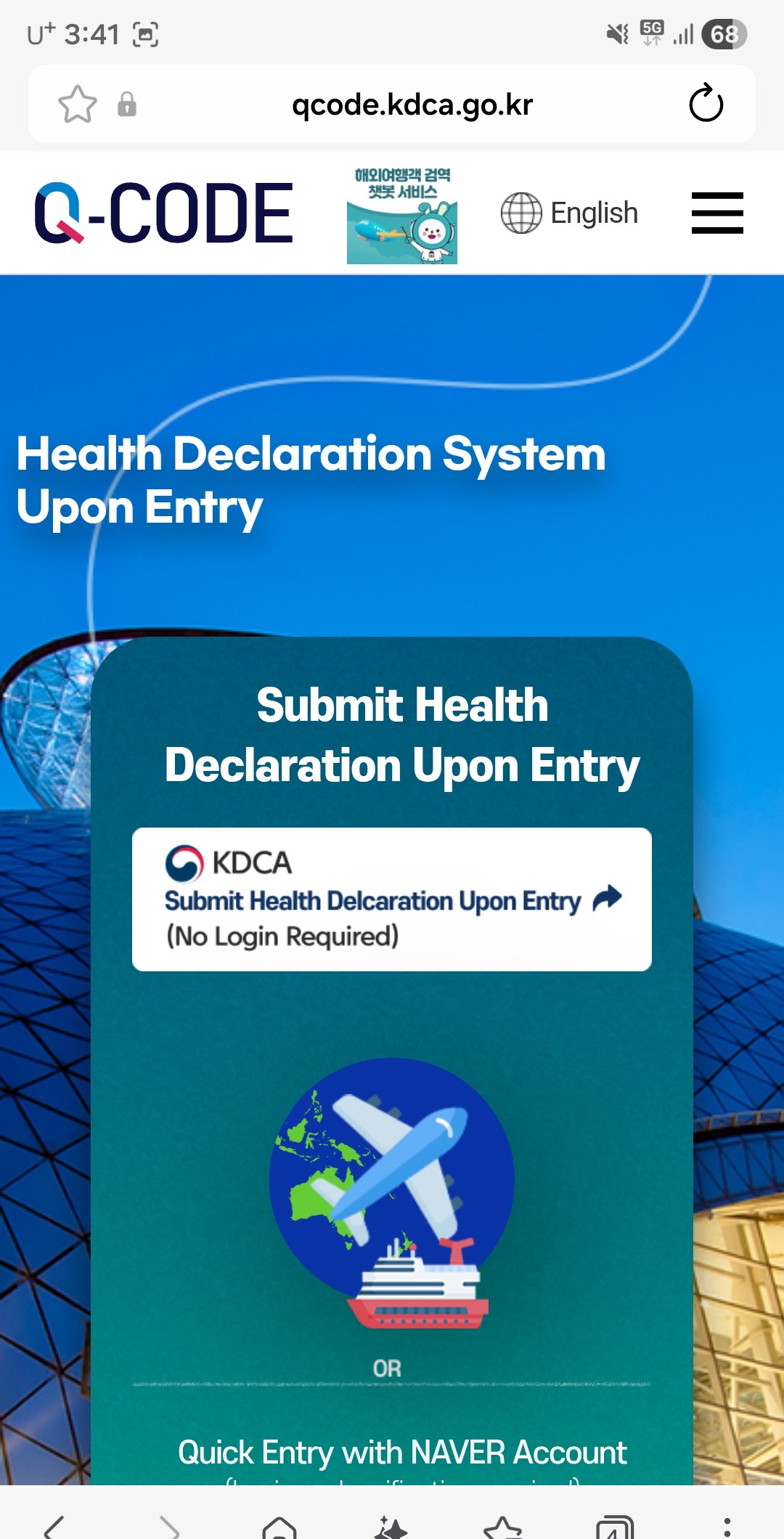
    The Q-Code portal in English, headed Health Declaration System Upon Entry, with a submit button marked No Login Required.
    The portal, in English. Note No Login Required — there is no account to create, and no reason to pay anyone to file this for you.

    qcode.kdca.go.kr

    • Register up to 7 days before your arrival

    qcode.kdca.go.kr

    • Register up to 7 days before your arrival
    • At the airport quarantine checkpoint, show the QR code — printed or on your phone screen, either works
    • If you would rather not register online, arrivals in the strict group can complete a paper health questionnaire on entry instead

    Use the official site. As with K-ETA, third-party services will happily charge you for filling in a free government form.

    5. If you have symptoms

    Regardless of which group you are in: if you arrive with symptoms of a monitored illness, you register a Q-Code or declare at quarantine. That applies to arrivals from the general group too — it is the one case where the 150-country exemption does not help you.

    This is a health measure, not paperwork. Declaring is the point of it.

    6. Before you fly

    • Most travellers do not need a Q-Code. Guidance saying otherwise is usually left over from the pandemic
    • You need one if arriving from a strict quarantine area country — about 25 of them
    • Stopovers count. Transiting a listed country can trigger the requirement
    • The list is revised quarterly in response to outbreaks — check close to departure
    • Official site: qcode.kdca.go.kr. Register up to 7 days ahead
    • QR code on your phone is fine; no need to print
    • Symptoms on arrival? Declare regardless of where you came from

    PART 2 — 한국어

    한국 입국 요건을 검색하면 출국 전에 Q-Code를 등록하라는 안내가 여럿 나옵니다.

    2026년 현재 대부분의 여행자에게 그건 사실이 아닙니다. Q-Code는 팬데믹 기간에 의무가 됐고, 많은 안내가 그 뒤의 변화를 반영하지 못했습니다.

    누가 실제로 필요한지, 누가 아닌지, 그리고 자기 경우를 1분 안에 확인하는 법을 정리했습니다. 답은 어디서 출발하는지에 달려 있고, 그 목록은 분기마다 바뀝니다.

    1. 짧은 답

    한국은 입국자를 두 그룹으로 나눕니다.

    일반 검역관리지역 — 약 150개국으로 미국 대부분과 중국 대부분이 포함됩니다. 여기서 오는 경우 증상이 있을 때만 Q-Code를 등록합니다. 그렇지 않으면 아예 필요 없습니다.

    중점 검역관리지역 — 약 25개국. 여기서 오는 입국자는 Q-Code를 등록하거나 입국 시 종이 건강상태질문서를 작성해야 합니다.

    방문자 대부분은 첫 번째 그룹이고, 여기까지만 읽어도 됩니다.

    2. 중점 관리 대상은 어디인가

    2026년 7월 1일 시행 목록 기준으로 대략 이렇습니다.

    • 중동 — 바레인, 이란, 이라크, 이스라엘, 요르단, 쿠웨이트, 레바논, 오만, 카타르, 사우디아라비아, 시리아, 아랍에미리트, 예멘
    • 아프리카 — 콩고민주공화국, 에티오피아, 마다가스카르, 르완다, 남수단, 우간다
    • 아시아 — 방글라데시, 캄보디아, 인도, 몽골, 중국 일부 지역
    • 미국 — 뉴멕시코주, 워싱턴주

    7월 개정에서 아프리카 4개국이 에볼라 유행을 이유로 추가됐습니다. 이 목록이 어떻게 작동하는지 보여주는 대목입니다. 현재의 유행 상황에 따라 분기마다 바뀝니다.

    위 목록을 현재 기준으로 믿지 마세요. 2026년 3분기 기준이며 개정될 예정입니다. 출국 전에 공식 사이트에서 확인하세요.

    3. 경유가 함정입니다

    여기가 많이들 놓치는 부분입니다.

    거주지가 아니라 출발지가 기준이고, 경유지도 포함됩니다. 중점 관리 국가를 경유하면 다른 곳에서 출발했더라도 요건이 적용될 수 있습니다.

    여정이 중동이나 목록에 있는 나라를 거친다면, 짐작하지 말고 확인하세요.

    4. 확인과 등록 방법

    공식 포털은 질병관리청이 운영합니다.

    영문으로 표시된 Q-Code 포털. Health Declaration System Upon Entry 제목과 로그인 불필요 표시가 보인다.
    포털 화면입니다. No Login Required — 만들 계정도 없고, 대행업체에 돈을 낼 이유도 없습니다.

    qcode.kdca.go.kr

    • 입국 7일 전부터 등록할 수 있습니다

    qcode.kdca.go.kr

    • 입국 7일 전부터 등록할 수 있습니다
    • 공항 검역대에서 QR 코드를 제시합니다. 인쇄본이든 휴대폰 화면이든 상관없습니다
    • 온라인 등록을 원치 않으면 중점 관리 대상 입국자는 입국 시 종이 건강상태질문서를 작성할 수도 있습니다

    공식 사이트를 이용하세요. K-ETA와 마찬가지로, 무료 정부 서식을 대신 채워주고 돈을 받는 업체가 있습니다.

    5. 증상이 있다면

    어느 그룹이든 마찬가지입니다. 감시 대상 질환의 증상이 있는 상태로 입국하면 Q-Code를 등록하거나 검역대에서 신고합니다. 일반 그룹에서 오는 경우에도 적용되며, 150개국 면제가 도움이 되지 않는 유일한 경우입니다.

    이건 서류 절차가 아니라 방역 조치입니다. 신고하는 것이 제도의 목적입니다.

    6. 출국 전에

    • 대부분의 여행자는 Q-Code가 필요 없습니다. 필요하다는 안내는 대개 팬데믹 시기의 잔재입니다
    • 중점 검역관리지역 약 25개국에서 오는 경우에만 필요합니다
    • 경유도 포함됩니다. 목록에 있는 나라를 거치면 요건이 생길 수 있습니다
    • 목록은 유행 상황에 따라 분기마다 개정됩니다. 출발 직전에 확인하세요
    • 공식 사이트 qcode.kdca.go.kr, 입국 7일 전부터 등록
    • QR은 휴대폰 화면으로도 됩니다. 인쇄할 필요 없습니다
    • 증상이 있다면? 출발지와 무관하게 신고하세요

    함께 읽으면 좋은 글

    참고자료 / Sources

  • Incheon and Gimpo to Central Seoul: Which Option, and What If You Land at 1am

    This guide is written in two parts. English first, Korean below. 이 글은 두 파트로 되어 있습니다. 영문이 먼저, 한국어가 아래에 있습니다.


    PART 1 — ENGLISH

    Most guides tell you the airport train takes 40 minutes and costs ₩9,500, then stop.

    That is fine if you land at 2pm with a carry-on. It is useless if you land at 1am, or with two large suitcases, or heading somewhere the train does not go.

    Here is the decision as it actually presents itself, including the gap between the last train and the first one — the part nobody covers.

    1. From Incheon: the three options

    Time Fare Arrives at
    AREX Express ~40 min ₩9,500 Seoul Station only, non-stop
    AREX All-stop ~60 min ₩4,150–4,750 Seoul Station, stopping en route
    Airport bus 60–80 min ₩5,000–15,000 Neighbourhoods across Seoul
    Taxi 60–100 min ₩47,000–55,000 + toll Door to door

    Figures from Seoul’s official tourism site.

    The train ends at Seoul Station. If your hotel is near there or on subway lines 1 or 4, this is the obvious choice. The express is non-stop; the all-stop version is half the price and twenty minutes slower.

    The bus goes where the train does not — Gangnam, Jamsil, Myeongdong, Sinchon and many other districts, dropping you closer to your hotel. Slower and traffic-dependent, but often no subway transfer at the other end. Pay by cash, T-money card, or credit card.

    Taxis run ₩47,000–55,000 to central areas, plus a ₩7,900 expressway toll that catches people out. Four types serve the airport: standard, International (20% premium, English-speaking driver), Deluxe (40–50% more), and Jumbo vans for up to 8 people.

    2. Which one, honestly

    • Hotel near Seoul Station, light luggage → AREX express
    • Watching the budget, not in a hurry → AREX all-stop, half the price
    • Hotel in Gangnam, Jamsil, Myeongdong, Sinchon → airport bus, likely no transfer
    • Two or more large suitcases → airport bus or taxi. Dragging cases through Seoul Station transfers is worse than it sounds
    • Three or more people → taxi becomes competitive. Split four ways, ₩50,000 is close to four bus fares
    • Arriving between midnight and 4am → see below
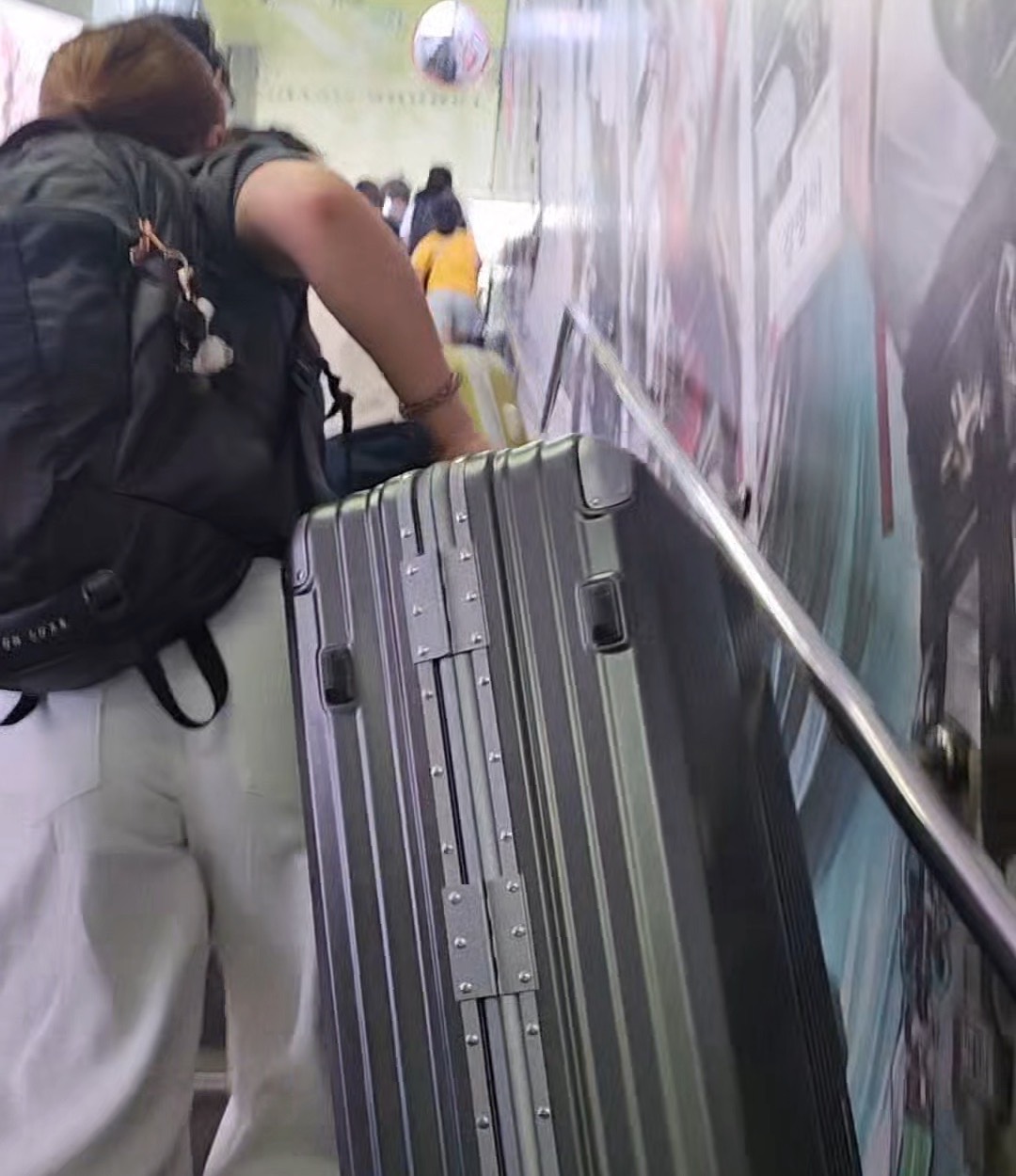
    A traveller with a backpack hauling a large hard-shell suitcase up a flight of stairs in a Seoul subway station, seen from behind.
    This is what “worse than it sounds” looks like. Transfers involve stairs, and stairs with two large cases is the part that turns a cheap route into a bad hour.

    One thing to keep straight: an airport bus is not a city bus. Airport buses have under-floor luggage holds and are built for exactly this. Ordinary Seoul city buses cap carry-on at 50 × 40 × 20 cm, which a checked-size suitcase exceeds — a driver may refuse to let you board. Once you are in the city, move a large case by subway or taxi, not by local bus. More on that in taking luggage on Seoul transport.

    3. Landing late: the gap nobody mentions

    Regular airport buses run roughly 04:00–06:00 first departure to 22:00–23:00 last. The train stops too. So if you land at 1am, the standard advice does not apply.

    Incheon runs night buses for exactly this window (Incheon International Airport):

    Route To From airport Fare (adult)
    N6000 Gangnam Express Bus Terminal 00:10–04:20 ₩17,000
    N6002 Cheongnyangni 00:00–04:40 ₩18,000
    N6701 Dongdaemun Design Plaza 23:50–04:40 ₩18,000
    N6703 Gwangnaru Station 23:40–04:50 varies by stop

    Boarding points at Terminal 1: stop 6A for N6000 and N6002, stop 3B for N6701 and N6703.

    Two things worth knowing. Night fares are roughly double the daytime bus — ₩17,000–18,000 against ₩5,000–15,000. And they drop you at a transport hub, not your door; at 3am the subway is closed, so budget for a short taxi at the other end.

    If your arrival falls in the narrow window when even night buses have stopped, a taxi is the only option, and the meter runs higher at night.

    4. From Gimpo: easier, and often overlooked

    Gimpo is much closer to the city, and its station is a hub on five lines: Subway 5, Subway 9, AREX, Gimpo Gold Line, and the Seohae Line.

    That means you can usually reach your destination with one transfer or none, and the fare is ordinary subway pricing rather than an airport premium. Seoul Station is about 22 minutes away by rail.

    If you have a choice of airports when booking, Gimpo saves both time and money on the transfer into the city.

    One caution: moving between Gimpo’s domestic and international terminals takes about 20 minutes. Factor that in if you are connecting.

    5. Before you land

    • Check where your hotel actually is — near Seoul Station favours the train, elsewhere often favours the bus
    • AREX all-stop is half the price of the express for twenty extra minutes
    • Taxi fares exclude the ₩7,900 expressway toll
    • Landing after midnight? Night buses N6000/N6002/N6701/N6703 run until roughly 04:40, at about double the daytime fare
    • Night bus stops at Terminal 1: 6A and 3B
    • Heavy luggage or three-plus people shifts the maths toward bus or taxi
    • Flying into Gimpo instead? Five subway lines, roughly 22 minutes to Seoul Station

    PART 2 — 한국어

    대부분의 가이드는 공항철도가 40분에 9,500원이라고 알려주고 끝납니다.

    오후 2시에 기내용 가방 하나로 도착한다면 그걸로 충분합니다. 하지만 새벽 1시에 내렸거나, 대형 캐리어가 두 개거나, 열차가 가지 않는 동네로 간다면 아무 도움이 안 됩니다.

    실제로 부딪히는 선택지를 정리했습니다. 막차와 첫차 사이의 공백 — 아무도 다루지 않는 그 구간까지요.

    1. 인천공항에서 — 세 가지 선택지

    소요시간 요금 도착지
    공항철도 직통 약 40분 9,500원 서울역 무정차
    공항철도 일반 약 60분 4,150~4,750원 서울역, 중간 정차
    공항버스 60~80분 5,000~15,000원 서울 각 지역
    택시 60~100분 47,000~55,000원 + 통행료 목적지 앞까지

    수치는 서울 공식 관광정보 기준입니다.

    공항철도는 서울역에서 끝납니다. 숙소가 서울역 근처거나 1·4호선 라인이면 이게 답입니다. 직통은 무정차, 일반열차는 절반 가격에 20분 더 걸립니다.

    공항버스는 열차가 가지 않는 곳으로 갑니다. 강남·잠실·명동·신촌을 비롯한 여러 지역에 서고, 숙소에 더 가까이 내려줍니다. 느리고 교통 상황을 타지만 도착해서 지하철을 갈아탈 일이 없는 경우가 많습니다. 현금·교통카드·신용카드로 결제합니다.

    택시는 도심까지 47,000~55,000원이고, 여기에 고속도로 통행료 7,900원이 별도로 붙습니다. 이걸 모르고 있다가 놀라는 경우가 많습니다. 공항에는 네 종류가 있습니다 — 일반, 인터내셔널(20% 할증, 영어 가능 기사), 모범(40~50% 비쌈), 그리고 최대 8인승 점보밴입니다.

    2. 그래서 뭘 타야 하나

    • 숙소가 서울역 근처, 짐이 가벼움 → 공항철도 직통
    • 비용을 아끼고 급하지 않음 → 공항철도 일반, 절반 가격
    • 숙소가 강남·잠실·명동·신촌 → 공항버스, 환승 없이 갈 가능성이 큼
    • 대형 캐리어 두 개 이상 → 공항버스나 택시. 서울역에서 캐리어 끌고 환승하는 건 생각보다 훨씬 고됩니다
    • 세 명 이상 → 택시가 경쟁력이 생깁니다. 넷이 나누면 5만원은 버스 네 명분과 비슷합니다
    • 자정~새벽 4시 도착 → 아래를 보세요
    큰 하드케이스 캐리어를 들고 지하철역 계단을 오르는 여행자의 뒷모습. 배낭을 메고 있다.
    “생각보다 훨씬 고되다”가 이런 모습입니다. 환승에는 계단이 따라오고, 대형 캐리어 두 개로 계단을 오르는 구간이 싼 경로를 힘든 한 시간으로 바꿔놓습니다.

    한 가지 구분할 것. 공항버스와 시내버스는 다릅니다. 공항버스는 하부 짐칸이 있고 애초에 이 용도로 만들어졌습니다. 일반 서울 시내버스는 휴대품이 50 × 40 × 20cm 이내로, 위탁수하물 크기 캐리어는 초과이고 기사가 승차를 거부할 수 있습니다. 시내에 들어온 뒤 큰 캐리어를 옮길 때는 지하철이나 택시를 쓰세요. 자세한 내용은 캐리어 들고 대중교통 타기에 있습니다.

    3. 늦게 도착했을 때 — 아무도 말해주지 않는 공백

    일반 공항버스는 대체로 첫차 04~06시, 막차 22~23시입니다. 공항철도도 끊깁니다. 그래서 새벽 1시에 내리면 일반적인 안내가 전부 무용지물입니다.

    인천공항은 정확히 이 시간대를 위해 심야버스를 운행합니다(인천국제공항).

    노선 행선지 공항 출발 요금(성인)
    N6000 강남고속버스터미널 00:10~04:20 17,000원
    N6002 청량리 00:00~04:40 18,000원
    N6701 동대문디자인플라자 23:50~04:40 18,000원
    N6703 광나루역 23:40~04:50 정류장별 상이

    제1여객터미널 승차장: N6000·N6002는 6A, N6701·N6703은 3B입니다.

    두 가지를 알아두세요. 심야 요금은 주간 버스의 약 두 배입니다(17,000~18,000원 대 5,000~15,000원). 그리고 목적지 앞이 아니라 교통 거점에 내려줍니다. 새벽 3시에는 지하철이 끊겨 있으니 거기서 택시비를 한 번 더 예상해 두세요.

    심야버스마저 끊긴 좁은 시간대에 도착했다면 택시밖에 없고, 심야에는 미터기가 더 빨리 올라갑니다.

    4. 김포공항에서 — 더 쉽고, 자주 간과됩니다

    김포는 도심에서 훨씬 가깝고, 김포공항역이 다섯 개 노선이 만나는 환승역입니다. 5호선, 9호선, 공항철도, 김포골드라인, 서해선입니다.

    그래서 대개 환승 없이 또는 한 번만에 목적지에 닿고, 요금도 공항 할증 없이 일반 지하철 수준입니다. 서울역까지 철도로 약 22분입니다.

    항공권을 고를 때 공항을 선택할 수 있다면, 김포는 시내 진입에서 시간과 돈을 모두 아껴줍니다.

    주의 하나: 김포공항 국내선과 국제선 청사 사이 이동에 약 20분이 걸립니다. 환승이 있다면 계산에 넣으세요.

    5. 도착 전에

    • 숙소 위치부터 확인 — 서울역 근처면 열차, 그 외 지역이면 버스가 유리한 경우가 많습니다
    • 공항철도 일반열차는 직통의 절반 가격입니다. 20분만 더 쓰면 됩니다
    • 택시 요금에 고속도로 통행료 7,900원은 포함돼 있지 않습니다
    • 자정 이후 도착이라면? 심야버스 N6000·N6002·N6701·N6703이 새벽 4시 40분경까지, 주간의 약 두 배 요금으로 운행합니다
    • 제1터미널 심야버스 승차장은 6A3B
    • 짐이 많거나 세 명 이상이면 버스나 택시 쪽으로 계산이 기웁니다
    • 김포로 들어온다면? 지하철 다섯 개 노선, 서울역까지 약 22분

    함께 읽으면 좋은 글

    참고자료 / Sources

  • K-ETA in 2026: 22 Countries Are Exempt — But You Might Still Want to Apply

    This guide is written in two parts. English first, Korean below. 이 글은 두 파트로 되어 있습니다. 영문이 먼저, 한국어가 아래에 있습니다.


    PART 1 — ENGLISH

    If you are flying to Korea from the US, the UK, Japan, Australia or 18 other places, you do not need a K-ETA in 2026.

    Most guides stop there. That is where they get it wrong — because applying anyway gets you two things the exemption does not, and because the exemption has an expiry date that is closer than it looks.

    1. Are you exempt?

    Korea’s Ministry of Justice extended the temporary K-ETA waiver through December 31, 2026. Twenty-two countries and territories are covered:

    Region Covered
    Americas United States (including Guam), Canada
    Europe Austria, Belgium, Denmark, Finland, France, Germany, Italy, Netherlands, Norway, Poland, Spain, Sweden, United Kingdom
    Asia-Pacific Australia, Hong Kong, Japan, Macao, New Zealand, Singapore, Taiwan

    If your passport is from one of these, you can board without a K-ETA.

    If it is not on this list, you still need a K-ETA before you fly — assuming you are otherwise eligible for visa-free entry. Apply early: approval usually comes within 72 hours, but “usually” is doing work in that sentence, and airlines will not board you without it.

    2. The exemption ends sooner than you think

    This waiver has been extended one year at a time. The current extension runs to December 31, 2026, and the requirement is scheduled to return on January 1, 2027 unless it is extended again.

    Nobody has announced what happens after that.

    This matters if you are booking ahead. A trip in November 2026 is covered. A trip in February 2027 currently is not — and you will not know for sure until the government decides, possibly late in the year. If your travel crosses into 2027, check again before you fly.

    3. Why apply even when you are exempt

    Here is what most guides miss. Being exempt means you may skip the K-ETA. It does not mean applying is pointless.

    A K-ETA approval gives you two things the exemption does not:

    • You skip the arrival card. Without a K-ETA, you fill out a paper arrival card on the plane or at the airport — every single trip. With one, you do not.
    • You can use the dedicated K-ETA lane at Incheon. A separate queue at immigration.

    And the approval lasts three years (or until your passport expires), covering every trip in that window. Fill it in once, skip the paperwork for three years.

    4. What it costs and how long it takes

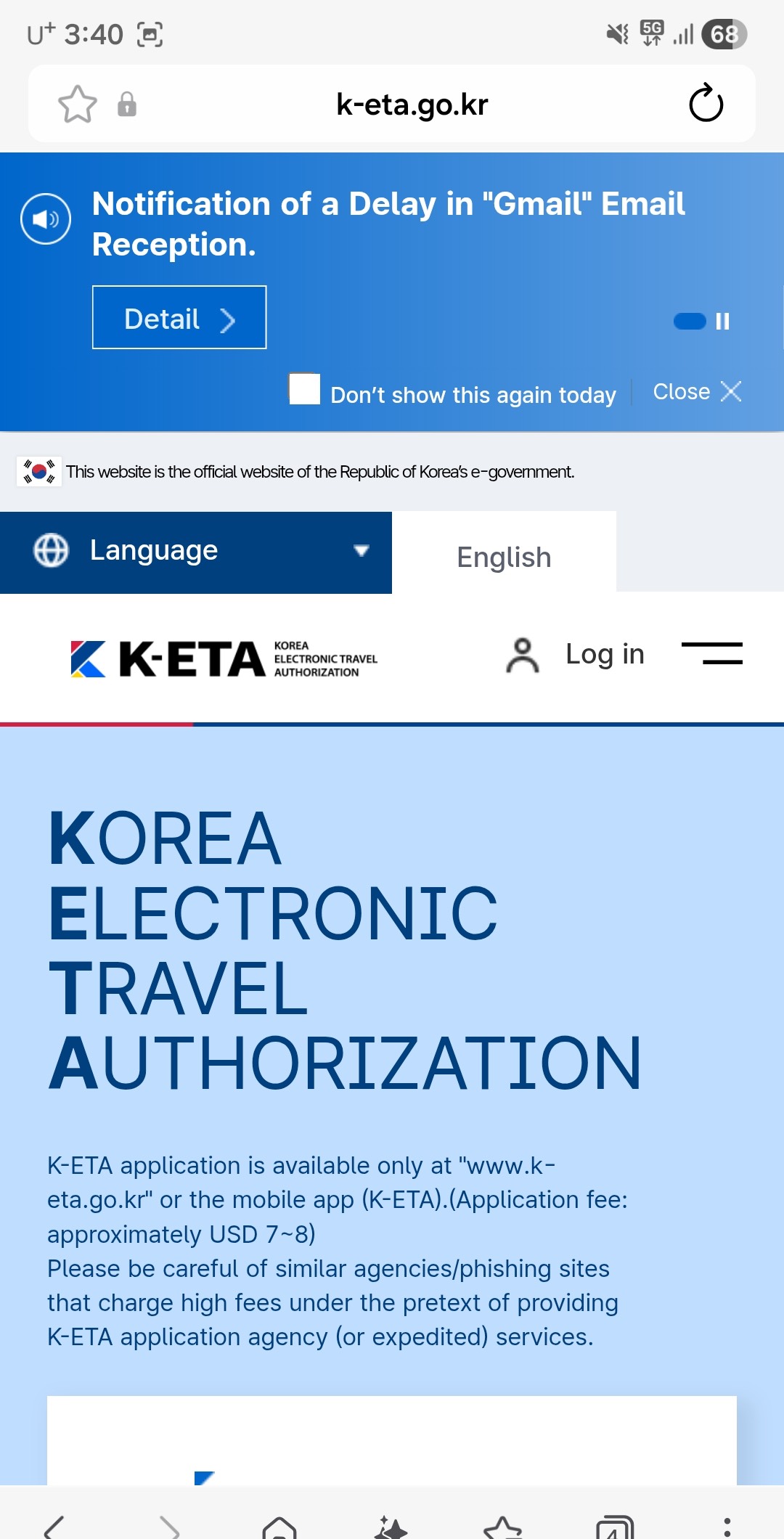
    The official K-ETA website in English, carrying a warning about similar agencies and phishing sites that charge high fees.
    k-eta.go.kr, the official site. The warning it carries on the front page is the point: agencies and phishing sites charge high fees for a government form that costs around USD 7–8.
    Fee ₩10,000 (roughly USD 7–8)
    Processing Generally within 72 hours
    Validity 3 years, or until your passport expires

    Apply at the official site: k-eta.go.kr

    Two cautions worth more than the fee:

    • Apply from the official site only. Search results are full of third-party services that charge several times the real price for filling in the same form.
    • Do not leave it to the airport. Processing is generally within 72 hours, not guaranteed. Apply at least a few days out.

    5. So should you apply?

    Your situation Recommendation
    Not on the exempt list Required. Apply at least 72 hours before departure
    Exempt, one short trip, minimal paperwork Skip it. The arrival card takes two minutes
    Exempt, but visiting more than once in 3 years Apply. ₩10,000 once covers three years of skipped arrival cards
    Exempt, but travelling in 2027 or later Check the current rule before booking — the waiver may have ended
    Exempt, and you hate queues Apply, for the dedicated immigration lane

    6. Before you book

    • Check whether your passport is on the 22-country list above
    • If not: apply for K-ETA at k-eta.go.kr, at least 72 hours before departure
    • If yes: applying anyway costs ₩10,000 and buys 3 years of no arrival cards
    • Travelling in 2027? The waiver is scheduled to end December 31, 2026 — verify before booking
    • Use the official site. Third-party “K-ETA services” charge extra for nothing

    PART 2 — 한국어

    미국, 영국, 일본, 호주를 비롯한 22개국에서 한국으로 오는 여행자는 2026년에 K-ETA가 필요 없습니다.

    대부분의 가이드는 여기서 끝납니다. 그런데 그게 틀린 지점입니다. 면제 대상이어도 신청하면 얻는 것이 두 가지 있고, 면제에는 생각보다 가까운 만료일이 있기 때문입니다.

    1. 나는 면제 대상인가

    법무부가 K-ETA 한시 면제를 2026년 12월 31일까지 연장했습니다. 대상은 22개 국가·지역입니다.

    지역 대상
    미주 미국(괌 포함), 캐나다
    유럽 오스트리아, 벨기에, 덴마크, 핀란드, 프랑스, 독일, 이탈리아, 네덜란드, 노르웨이, 폴란드, 스페인, 스웨덴, 영국
    아시아·태평양 호주, 홍콩, 일본, 마카오, 뉴질랜드, 싱가포르, 대만

    이 중 하나의 여권을 갖고 있다면 K-ETA 없이 탑승할 수 있습니다.

    명단에 없다면 출발 전에 K-ETA를 받아야 합니다(무비자 입국 대상인 경우). 미리 신청하세요. 승인은 보통 72시간 안에 나지만 ‘보통’이라는 말이 걸리고, 항공사는 K-ETA 없이 탑승시키지 않습니다.

    2. 면제는 생각보다 빨리 끝납니다

    이 조치는 1년 단위로 연장돼 왔습니다. 이번 연장은 2026년 12월 31일까지이고, 다시 연장되지 않으면 2027년 1월 1일부터 의무가 부활합니다.

    그 이후가 어떻게 될지는 아직 발표되지 않았습니다.

    미리 예약한다면 중요한 문제입니다. 2026년 11월 여행은 면제 대상이지만, 2027년 2월 여행은 현재 기준으로 아닙니다. 그리고 정부 결정이 연말에나 나올 수 있어서 그때까지는 확실히 알 수 없습니다. 여행이 2027년으로 넘어간다면 출발 전에 다시 확인하세요.

    3. 면제인데도 신청하는 이유

    여기가 대부분의 가이드가 놓치는 부분입니다. 면제란 K-ETA를 생략해도 된다는 뜻이지, 신청할 이유가 없다는 뜻이 아닙니다.

    승인받으면 면제만으로는 얻지 못하는 두 가지가 생깁니다.

    • 입국신고서를 쓰지 않아도 됩니다. K-ETA가 없으면 기내나 공항에서 종이 입국신고서를 매번 작성해야 합니다.
    • 인천공항 K-ETA 전용 심사대를 쓸 수 있습니다.

    그리고 승인은 3년간(여권 만료일 이내) 유효합니다. 그 기간의 모든 방문에 적용되니, 한 번 작성하고 3년간 서류를 건너뛰는 셈입니다.

    4. 비용과 소요 시간

    영문으로 표시된 K-ETA 공식 사이트. 높은 수수료를 받는 유사 대행 사이트와 피싱 사이트에 대한 주의 문구가 보인다.
    공식 사이트 k-eta.go.kr. 첫 화면에 붙어 있는 경고가 핵심입니다. 정부 수수료가 7~8달러인 서식을 두고 대행·피싱 사이트가 높은 수수료를 받습니다.
    수수료 1만원 (약 7~8달러)
    심사 보통 72시간 이내
    유효기간 3년 또는 여권 만료일까지

    신청은 공식 사이트 k-eta.go.kr 에서 합니다.

    수수료보다 중요한 주의사항이 둘 있습니다.

    • 반드시 공식 사이트에서 신청하세요. 검색 결과에는 같은 양식을 대신 채워주고 몇 배를 받는 대행 업체가 많습니다.
    • 공항에서 하려 하지 마세요. 72시간은 ‘보통’이지 보장이 아닙니다. 최소 며칠 전에 신청하세요.

    5. 그래서 신청해야 하나

    내 상황 권장
    면제 명단에 없음 필수. 출발 72시간 전까지 신청
    면제 대상 · 짧은 단발 여행 생략해도 무방. 입국신고서는 2분이면 씁니다
    면제 대상 · 3년 안에 두 번 이상 방문 신청 권장. 1만원으로 3년간 입국신고서 면제
    면제 대상 · 2027년 이후 여행 예약 전 현재 규정 확인 — 면제가 끝났을 수 있습니다
    면제 대상 · 줄 서기가 싫다 신청. 전용 심사대를 쓸 수 있습니다

    6. 예약 전 확인할 것

    • 내 여권이 위 22개국 명단에 있는지 확인
    • 없다면 k-eta.go.kr 에서 출발 72시간 전까지 신청
    • 있다면 — 그래도 신청하면 1만원으로 3년간 입국신고서가 면제됩니다
    • 2027년 여행이라면? 면제는 2026년 12월 31일 종료 예정 — 예약 전 확인
    • 공식 사이트를 쓰세요. 대행 업체는 같은 일에 더 받습니다

    함께 읽으면 좋은 글

    참고자료 / Sources